
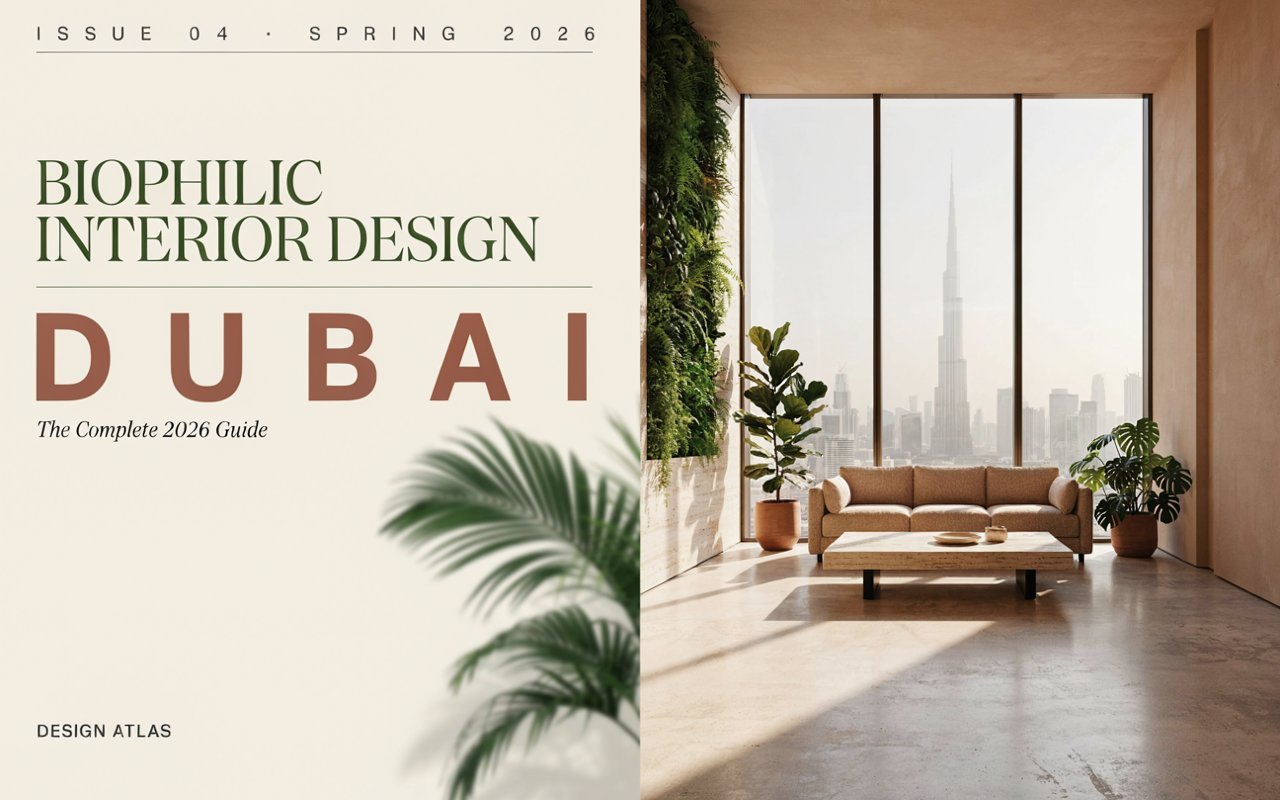
A recent industry survey found that homes with biophilic elements report measurably lower reported stress levels among occupants compared to conventionally finished interiors. That single data point explains why biophilic interior design Dubai clients are requesting has become a line item in nearly every renovation brief The Vertical receives this year, not an optional add-on.
What Biophilic Interior Design Actually Means in a Desert City
Biophilic interior design Dubai practitioners work with is not about filling a room with plants and calling it done. The term comes from biophilia, our innate pull toward living systems, and it covers light, water, natural materials, airflow, and spatial rhythm as much as greenery.
In a city built on reclaimed desert land, this philosophy has to solve a harder problem than it does in Copenhagen or Singapore. The climate outside is hostile for eight months of the year. Biophilic interior design Dubai architects favor therefore leans on controlled light, drought-resistant planting, and material choices that read as organic without demanding constant upkeep in 45-degree heat.
This is also why biophilic interior design Dubai fit-out teams recommend rarely copies Western templates directly. A living wall specified for a London office will not survive a Dubai balcony. Everything gets adapted.
Why Dubai Interiors Need This More Than Most Cities
Dubai apartments and villas are sealed environments for most of the year. Air conditioning runs constantly, windows stay shut against heat and dust, and natural ventilation is rare. That combination creates what designers call sensory flattening: rooms that are temperature-perfect but emotionally sterile.
Biophilic interior design Dubai clients increasingly ask for directly counters this. Water features references Islamic architectural tradition, where courtyard fountains and reflecting pools have functioned for centuries as both cooling devices and psychological anchors. Bringing that history into a modern apartment is not a gimmick, it is a return to a design logic this region already understood.
Residents who spend ten to twelve hours a day inside climate-controlled buildings need more than clean lines and neutral paint. They need spaces that respond to them.
The Four Pillars of Biophilic Interior Design in Dubai’s Climate
1. Controlled Natural Light
Floor-to-ceiling glazing on north-facing elevations brings in warm indirect light without the punishing solar gain of a south or west exposure. Clerestory windows pull daylight deep into a floor plan while keeping lower walls solid for insulation and privacy.
Skylights over double-height spaces, stairwells especially, create the sensation of open sky without the thermal penalty of a full glass roof. This is one of the few climate-specific adaptations that separates biophilic interior design Dubai professionals specify from generic international guidance.
2. Water as an Interior Element
Courtyard fountains, indoor water walls, and shallow reflecting pools positioned to catch afternoon light do more than look elegant. The sound of moving water measurably reduces cortisol response in occupants, and it layers a sensory dimension that static decor cannot replicate.
3. Living Walls and Green Corridors
A living wall built into a load-bearing interior elevation, complete with a dedicated irrigation line run at construction stage, costs a fraction of the same feature retrofitted after handover. This is the single biggest lesson from projects across the city: sequence matters as much as design intent.
4. Natural Materials as Structure, Not Finish
Travertine, limestone-effect stone, warm timber tones, and woven natural fibers form the bones of the room rather than sitting on top as decoration. Linen and cotton curtains, natural fiber rugs, and unlacquered wood finishes complete the palette.
Living Walls: The Feature Everyone Wants and Nobody Plans Correctly
Living walls have become the most requested single element in biophilic interior design Dubai clients bring to first consultations, and also the most frequently mis-specified.
A hydroponic living wall needs a water source, drainage, grow lighting if it sits away from a window, and a maintenance contract. Skipping any one of these turns a design statement into a dead plant wall within four months.
For villas, entryways, staircases, and courtyard walls are the strongest placements because they get natural light without direct heat exposure. Drought-tolerant species like philodendron, pothos, and select succulent varieties handle Dubai’s indoor humidity swings better than tropical ferns that look appealing in a showroom photo.
Retrofit Versus New-Build: The Cost Difference Nobody States Clearly
Almost every article on this topic mentions that retrofitting costs more than building in from the start, but few give numbers. Here is the honest range based on current UAE market rates.
| Living Wall Scenario | Approximate AED Cost |
|---|---|
| Specified at construction/fit-out stage (structural wall, built-in irrigation) | 400 to 900 per sq ft |
| Retrofitted onto existing plastered wall (added irrigation, structural bracket) | 900 to 1,800 per sq ft |
| Artificial/preserved green wall (no irrigation needed) | 250 to 500 per sq ft |
| Freestanding modular green wall unit | 3,000 to 12,000 per unit |
A live wall specified before the fit-out contractor closes the ceiling void can run at less than half the cost of the same wall added after the client moves in. This is the single most important budgeting insight in biophilic interior design Dubai homeowners rarely get told before signing a contract.
Room-by-Room Biophilic Strategy for Dubai Homes
Most guides on biophilic interior design Dubai residents find online stop at general principles. Here is how it actually breaks down by room.
Living room. This is where budget should concentrate first. A travertine-effect feature wall paired with a linen curtain scheme and one anchor plant grouping delivers the highest visual return. Expect AED 8,000 to 25,000 depending on wall size and stone grade.
Kitchen. Natural stone countertops, ample task lighting positioned to mimic daylight angles, and a small herb wall near a window if orientation allows. Avoid full living walls in kitchens; grease and heat shorten plant life significantly.
Bedrooms. Prioritize light control over greenery here. Blackout-capable linen-look drapery, warm timber headboards, and one or two low-maintenance plants (snake plant, ZZ plant) that tolerate lower light and irregular watering.
Bathrooms. High humidity actually favors certain plants here, but ventilation must be excellent or mold becomes the trade-off. Natural stone tiling and a single well-placed skylight do more work than greenery in most bathroom layouts.
Home offices. This is where biophilic interior design Dubai companies increasingly steer corporate and residential clients alike, since studies link daylight exposure and greenery to measurably better focus. A desk positioned perpendicular to a window, rather than facing it directly, balances light without glare.
Where Dubai’s Top Interior Projects Get This Right
Projects across Palm Jumeirah villas and Business Bay apartments increasingly blend biophilic elements with contemporary structure rather than treating them as separate design layers. The strongest examples share three traits: greenery integrated at the structural planning stage, water features positioned to catch existing natural light rather than requiring new openings, and material palettes that stay consistent from entry to bedroom rather than changing style room to room.
Office interiors across Dubai Design District have adopted the same logic for a different reason. Open layouts, indoor gardens, and daylight-first floor plans are now framed as productivity infrastructure rather than aesthetic preference, and that framing has started shaping residential briefs too.
What Most Biophilic Renovations in Dubai Get Wrong
Three mistakes show up repeatedly across projects The Vertical has audited or taken over mid-way.
Overplanting a small space. Biophilic interior design Dubai apartments benefit from restraint. Three well-placed larger plants outperform twelve small pots crowding a console table, both visually and in maintenance burden.
Ignoring irrigation planning until after installation. This single decision determines whether a living wall survives its first summer or needs full replacement by month six.
Treating natural materials as purely decorative. Timber, stone, and linen need to be specified with Dubai’s humidity and UV exposure in mind. A finish that looks identical to European stock photos may not perform the same way against a west-facing window here.
Key Takeaways
- Biophilic interior design Dubai homeowners are adopting goes beyond plants to include light strategy, water features, and structural material choices.
- Living walls specified at construction stage cost roughly half of the same feature retrofitted later.
- Drought-tolerant plant species and dedicated irrigation are non-negotiable for long-term survival in this climate.
- Room-by-room strategy matters more than a single blanket design approach across a villa or apartment.
- Natural materials should be chosen for UV and humidity performance, not appearance alone.
- The strongest Dubai projects integrate biophilic elements from the earliest design stage rather than adding them after handover.
Bring Biophilic Design Into Your Dubai Home With The Vertical
If you are planning a villa renovation, apartment fit-out, or office redesign and want biophilic interior design Dubai’s climate can actually sustain long-term, The Vertical’s design team can walk your space and build a phased plan that fits your budget and timeline. We handle everything from structural living wall integration to material sourcing and final installation.
Reach out through thevertical.ae/contact to book a walkthrough, or explore recent work on our interior fit-out portfolio to see how these principles apply across villas and commercial spaces in the UAE.
Frequently Asked Questions
Is biophilic interior design expensive to implement in Dubai?
Cost depends heavily on timing and scope. A modest biophilic refresh, plants, natural textiles, one feature wall, can start around AED 5,000 to 12,000 for a single room, while full villa integration with structural living walls runs significantly higher.
What plants survive best in Dubai’s indoor climate?
Drought-tolerant, low-light-tolerant species perform best indoors. Pothos, philodendron, snake plants, and ZZ plants handle Dubai’s air-conditioned interiors and irregular watering schedules far better than tropical species that need constant humidity.
Can biophilic design work in a rented apartment?
Yes, with adjustments for what cannot be structurally altered. Freestanding green walls, natural textile swaps, and portable water features deliver much of the benefit without requiring permanent changes a landlord would need to approve.